
Produced by

Caption
Slide 27 of 165
Cities Made of Water
August 14, 2018
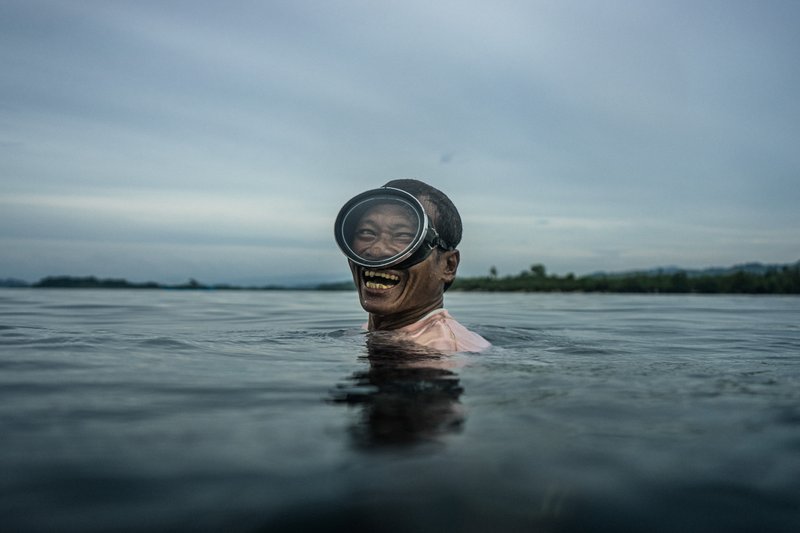
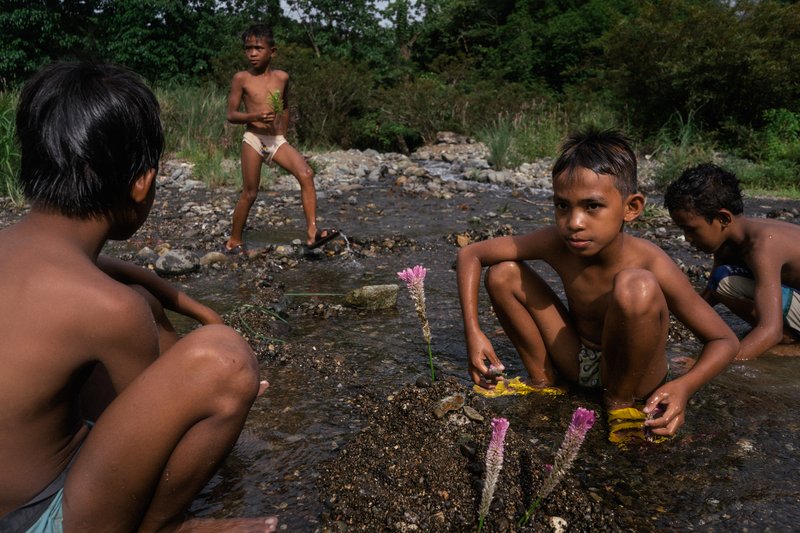
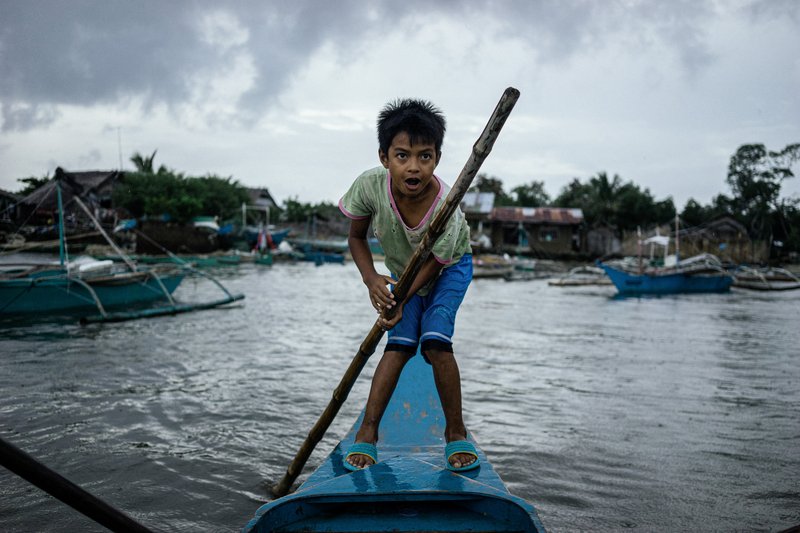
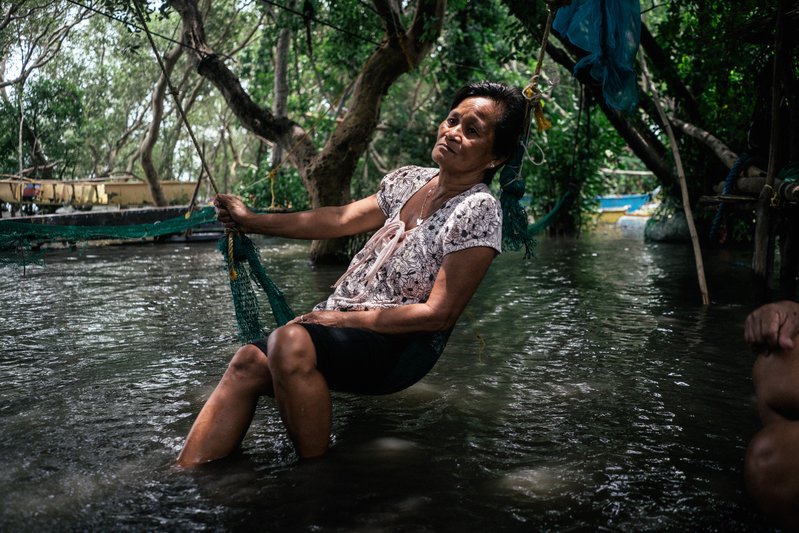
Laila Beltran sits in a hammock fashioned from an old nylon net in Carbonan, Batangas, a village nestled in a mangrove forest. The village regularly floods, especially during the rainy season, when even the solitary concrete road going into Carbonan becomes submerged. The villagers struggle with the rising waters, forced to raise all their possessions and homes on stilts, but they have also found a way to make the most of it, turning their "backyard" into a wading pool where the children play after school and the adults cool themselves and chat while swinging in their makeshift hammocks. Much of the mangrove forests lining the coastlines of the Philippines, including here in Batangas, have been cut down, converted into fish or shrimp ponds, informal settlements, or concrete sea walls, but the Philippine government has finally realized that mangroves play a crucial role in protecting coastal areas from erosion and climate-related disasters such as typhoons, storm surges, and flooding, and in providing food and commerce to coastal communities. A kilometer of mangrove can reduce the strength of a tsunami by 70%, and can store four times more carbon than a rainforest.
Hannah Reyes Morales
See more at MediaStorm